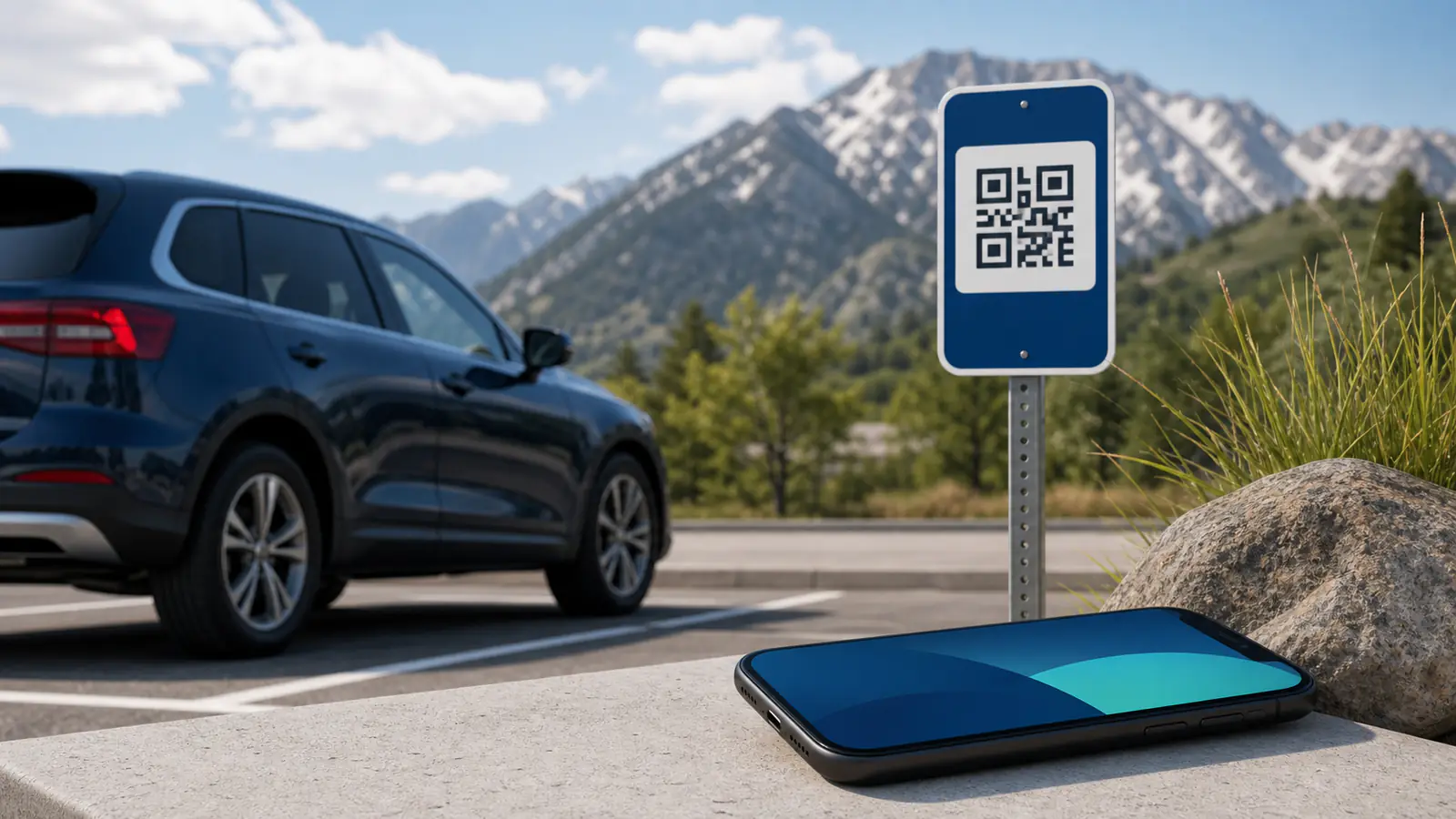
Quick answer: Mobile payments make sense when drivers need a convenient way to start a parking session and the property can support the experience with clear signs and simple instructions.
Technology is only useful when it makes parking easier. A mobile payment option should match the property, the length of stay, and the people who use the lot.
Signs mobile payments may fit
- Visitors arrive at different times and need a self-service option.
- The property wants flexible parking sessions without a physical payment machine.
- Drivers can safely stop, read a sign, and complete the steps before leaving the space.
- The site can provide a clear alternative or support path when someone needs help.
What drivers need
The sign should clearly show that payment is required, when it applies, and how to begin. The mobile page should be easy to read and should request only what is needed for the parking session.
Coverage, accessibility, language, and the typical driver should all be considered. A solution that works at one property may not be the right fit for another.
Keep the setup focused
Start with the parking goal, then decide whether mobile payment, permits, time limits, or a combination is the clearest answer. Avoid adding steps that do not improve the driver experience or property operations.
Review our mobile parking payment service or contact the Wasatch Parking team.
Public guidance: Every property, agreement, and local requirement is different. This guide is general information, not legal advice or a description of Wasatch Parking’s internal procedures.